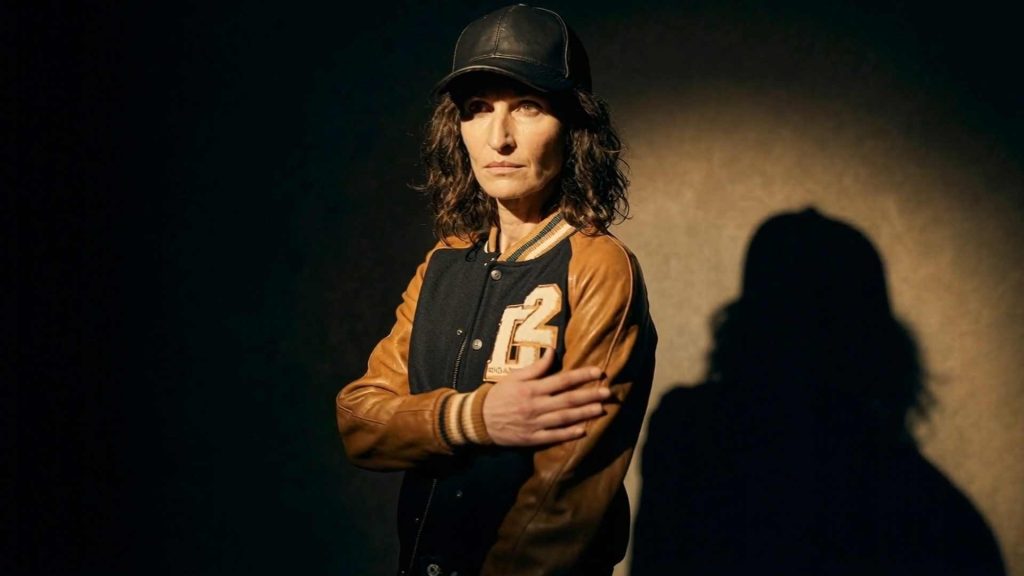
In this section, you can explore the full collection of creative assets used throughout the project. This includes image prompts, video prompts, and a detailed breakdown of each shot. For every sequence, both the first frame and the final frame are provided, giving you a clear view of how the scene evolves from concept to completion.
These assets offer full transparency into the production process and demonstrate how prompts, framing, and visual decisions shape the final results. It also serves as a reference library for understanding the progression, consistency, and creative choices behind each shot in the project.
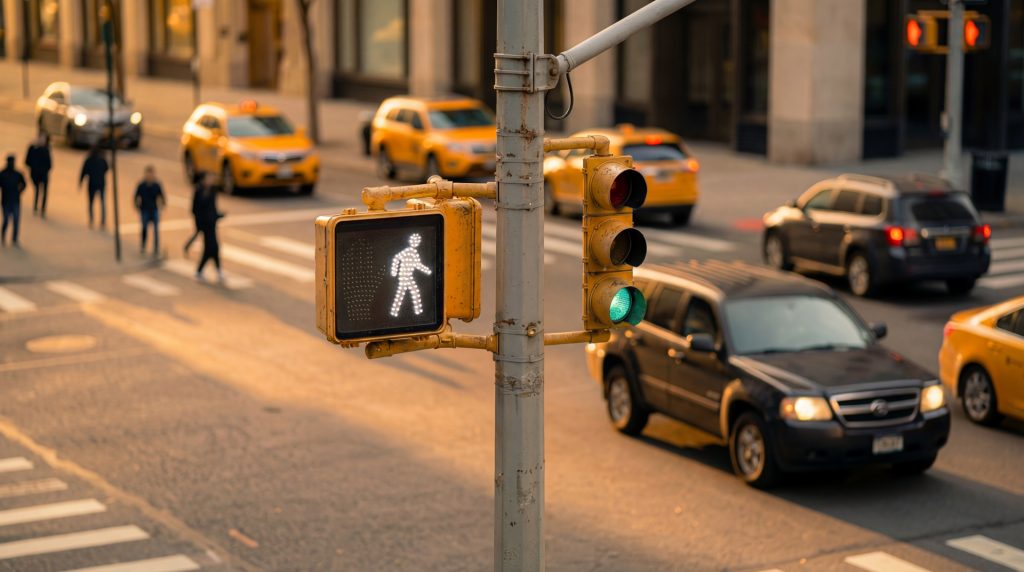
Chosen From The Grid:

<instruction>
Analyze the entire composition of the input image. Identify the key subject: the traffic light and pedestrian signal unit (including the red hand symbol, the pole, the traffic signal stack, and its surrounding intersection environment).
Generate a cohesive 3x3 grid “Cinematic Traffic Light Study” featuring 9 distinct camera shots of the same traffic light in the same environment.

**Row 1 (Establishing Context — Environment & Full Structure):**
1. **Extreme Long Shot (ELS):** The traffic light appears small, surrounded by the full intersection, crosswalks, cars, and buildings.
2. **Long Shot (LS):** Full view of the traffic light from top to bottom, including pole, signals, and nearby street elements.
3. **Medium Long Shot (MLS):** 3/4 view of the traffic light, framed from mid-pole upward, highlighting its structure while keeping some environment.

**Row 2 (Core Coverage — Functional & Structural Focus):**
4. **Medium Shot (MS):** Framed around the pedestrian signal and main traffic light unit, capturing both red-hand display and signal stack.
5. **Medium Close-Up (MCU):** Closer shot focusing on the pedestrian hand symbol and traffic signal head.
6. **Close-Up (CU):** Tight framing on the illuminated red hand or the red light lens.

**Row 3 (Details & Angles — Technical & Artistic Views):**
7. **Extreme Close-Up (ECU):** Macro detail of LED texture, metal casing, screws, or reflective lens surface.
8. **Low Angle (Worm’s Eye):** Dramatic upward angle looking up at the traffic light against the sky/buildings.
9. **High Angle (Bird’s Eye):** Looking down toward the top of the signal, pole joints, and surrounding street pattern.

Ensure strict consistency: same traffic light, same pole, same intersection, same lighting and time of day across all 9 panels. Depth of field should shift realistically (bokeh in close-ups).
</instruction>

A professional 3x3 cinematic storyboard grid containing 9 panels.
The grid showcases the traffic light from wide environmental context to intimate technical detail.
**Top Row:** Wide contextual shots.
**Middle Row:** Functional mid-range views.
**Bottom Row:** Macro detail and angle-driven perspectives.
All frames feature photorealistic lighting, consistent color grading, and accurate reproduction of the traffic light’s shape, textures, and illumination.
{
"camera": {
"movement": "Smooth lateral move to the right, revealing more of the street and intersection.",
"style": "Cinematic with subtle handheld micro-movement for natural realism.",
"stabilization": "Light handheld drift, no hard shakes.",
"framing": "Medium-wide framing centered on the pedestrian signal and traffic lights as the move begins.",
"angle": "Eye-level camera position, maintaining a grounded urban perspective.",
"lens": {
"type": "35mm to 50mm prime",
"depth_of_field": "Shallow to moderate DOF, background softens gently while foreground remains crisp.",
"focus_behavior": "Continuous autofocus, keeping the traffic signal in sharp detail as the camera moves."
}
},

"movement_effects": {
"parallax": "Foreground traffic signal shifts faster than the background buildings as the camera moves laterally.",
"motion_blur": "Minimal motion blur on passing cars to emphasize street activity.",
"speed": "Slow, controlled cinematic pacing."
},

"environment": {
"location": "Urban street intersection during golden hour.",
"key_elements": [
"Illuminated pedestrian walk signal",
"Green traffic light",
"Yellow taxis",
"Moving vehicles",
"Pedestrians in soft background blur"
],
"lighting": {
"type": "Golden hour natural lighting",
"qualities": "Warm, directional, soft shadows",
"reflections": "Warm highlights on cars and pavement"
},
"atmosphere": "Busy NYC-like street with warm, cinematic tones."
},

"style": {
"cinematic_tone": "Smooth, observational, film-like realism.",
"color_grade": "Warm, golden-hour palette with soft contrast.",
"mood": "Calm, urban, immersive.",
"visual_reference": "High-end street cinematography with polished naturalistic lighting."
},

"overall_prompt": "A cinematic lateral shot where the camera moves smoothly to the right, revealing an urban street scene with a glowing pedestrian signal, a green traffic light, yellow taxis, and passing vehicles. The movement is fluid with subtle handheld texture, eye-level framing, and warm golden-hour lighting, capturing the natural rhythm of the city."
}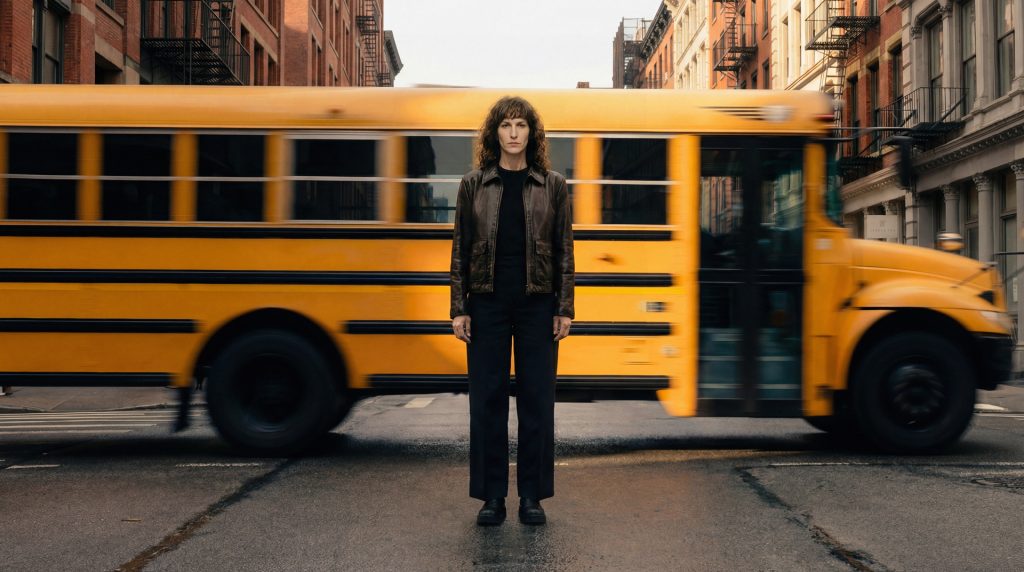
A cinematic street photograph shot from a straight-on, eye-level camera angle, capturing the model standing completely still at the center of an urban intersection. The camera maintains a symmetrical, locked-off framing that emphasizes balance and architectural depth. Behind the model, a yellow school bus moves horizontally through the frame, rendered with strong motion blur while the model remains sharp and precisely in focus. Soft, diffused daylight provides natural, even lighting across the scene, revealing the textures of the brick buildings lining the street. The composition uses a deep focal plane for the environment while isolating the model through subtle subject emphasis, creating a dramatic contrast between stillness and movement. The overall aesthetic evokes high-end editorial cinematography with controlled framing, measured pacing, and a visually striking urban atmosphere
Model: A woman stands centered in the middle of a cobblestone street in a historic downtown city block, flanked by tall, red-brick buildings.
Start Frame: The woman is wearing a brown leather jacket and black pants. A large, yellow American-style school bus is moving rapidly behind her from left to right. (Reference image 06.jpg)
End Frame: The woman is wearing a black and brown letterman jacket, a dark baseball cap, and holding a large brown tote bag. A dark blue luxury sedan is stationary behind her. (Reference image 07.jpg)
Camera and Action Instructions:
Camera Movement: The camera is static (no pan, tilt, or zoom) but exhibits a subtle, natural "handycam" or "breathing" motion (micro-movements/slight shake) throughout the entire clip to give a raw, documentary-style feel.
Transition Action: A separate, dark sedan (or similar vehicle) moves very quickly from right to left, passing immediately in front of the camera and close to the model, completely obscuring her for a brief moment.
Outfit Change/Stop Motion: The moment the fast-moving sedan clears the frame, the model instantly "cuts" to the End Frame look (new outfit, new stationary car in the background). The model's position remains exactly the same.
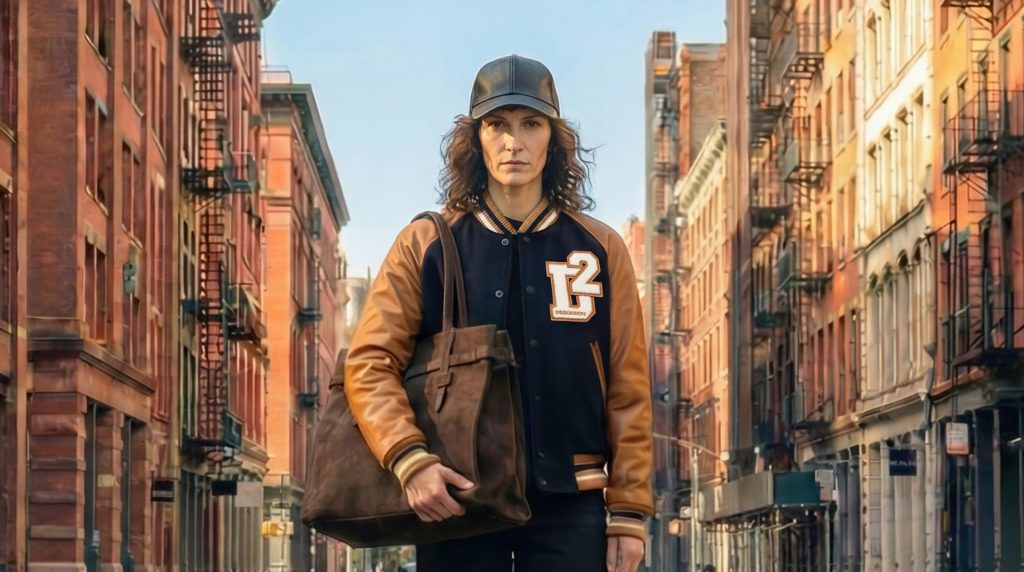
"In the main subject image (Image 1, "06.jpg"), maintain the original camera angle, position, and overall street context/vibe.

Background Modification:

Remove the bus currently visible in the background.

Replace the bus with a sleek, dark-colored car that appears to be moving rapidly away from the camera, adding a strong motion blur effect to the car to emphasize speed while keeping the rest of the street clear and sharp.

Subject Outfit Changes:

Replace the current jacket/top worn by the person with the varsity jacket shown in Image 5 ("79d489ae35c64c798ad0d8ae3e60a9ba.webp").

Add the black leather cap shown in Image 4 ("7ed2319a5641413196c149e785cb5a8a.webp") to the person's head.

Ensure the person is holding the bag shown in Image 2 ("91eaefe10b8e4a02ae76a7aee4957c5f.jpg") in their hand, adopting the same casual, confident way it is carried in Image 2.

The rest of the outfit should be a new, complementary ensemble (such as black jeans/trousers and boots) to create a cohesive, stylish look with the jacket and cap."
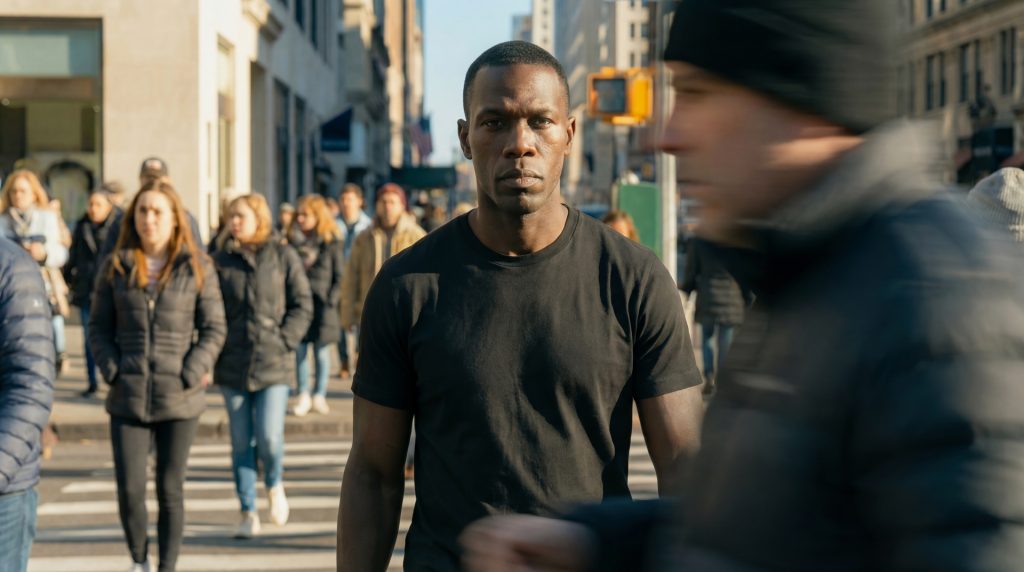
{
“subject”: {
“description”: “The model walking through a crowded city crosswalk.”,
“expression”: “Calm, focused, centered.”,
“movement”: “Steady forward motion while remaining visually distinct from the crowd.”
},
“camera”: {
“framing”: “Centered composition with the model as the primary focal point.”,
“depth_of_field”: “Shallow enough to keep the model sharp while softening the surrounding pedestrians.”,
“motion_effects”: “Passing pedestrians appear with gentle motion blur to emphasize contrast between stillness and movement.”
},
“environment”: {
“setting”: “A busy urban street filled with pedestrians crossing in multiple directions.”,
“lighting”: “Warm afternoon sunlight casting natural highlights on the model and buildings.”,
“background”: “City architecture and people fading into soft blur while maintaining a lively urban atmosphere.”
},
“style”: {
“visual_tone”: “Cinematic, realistic, emotionally grounded.”,
“mood”: “Urban, dynamic, and focused.”,
“aesthetic”: “High-quality street portrait with a polished contemporary feel.”
},
"overall_prompt": "A cinematic street portrait of the model walking through a crowded crosswalk, illuminated by warm afternoon light. The model remains sharp and centered while surrounding pedestrians move in soft motion blur, creating a dynamic contrast between stillness and activity."
}
Handheld Camera Movement

Shot 1 – Opening Frame
The video begins with the model standing centered in the frame, wearing a simple black T-shirt. The camera is locked in a medium shot—steady, well-lit, and focused on the model.
Shot 2 – Foreground Movement
A man walks across the foreground from left to right. He passes very close to the lens, creating a natural moment of full-frame occlusion—a smooth, real-world “mask” transition. As he moves in front of the camera, he briefly blocks the entire view of the model.
Shot 3 – The Transition Reveal
As the foreground man clears the frame, the model is revealed again—but now wearing the new outfit. The camera position, lighting, and posture remain identical, making the transition feel seamless and magical. The model stands confidently, giving a subtle expression or pose shift to emphasize the transformation.
Shot 4 – Final Look
The camera pushes in slightly or adds a gentle parallax move to highlight details of the new outfit, ending on a crisp, stylish hero shot.
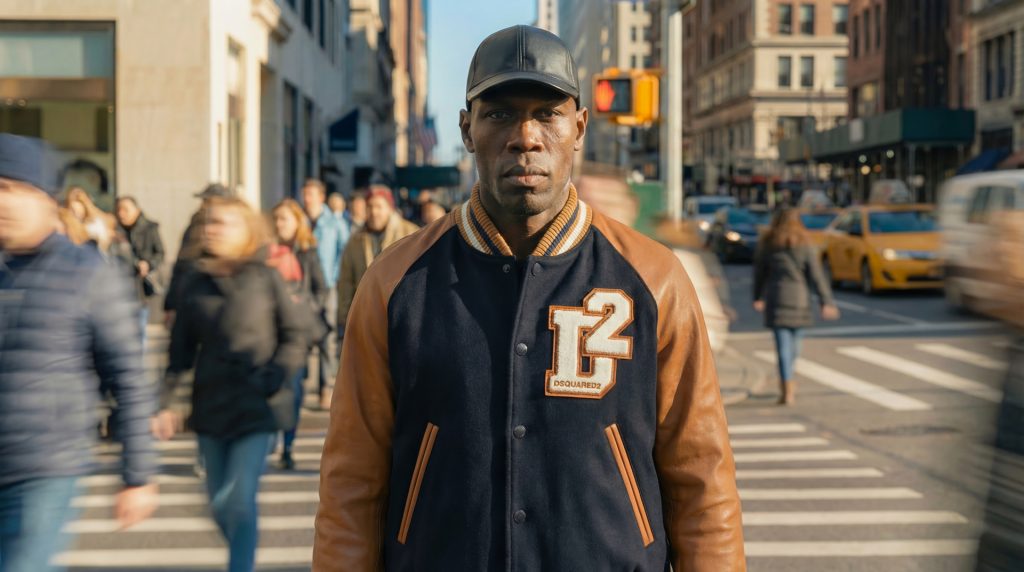
Do not alter the angle, position, or composition of the first image. Only modify the model’s outfit. Replace the current clothing with a jacket that matches the style, colors, and material shown in images 2 and 3. Additionally, the model should wear a cap consistent with the design and appearance shown in image 4. Ensure all new elements blend naturally with the lighting, texture, and overall realism of the first image while maintaining its original framing and perspective
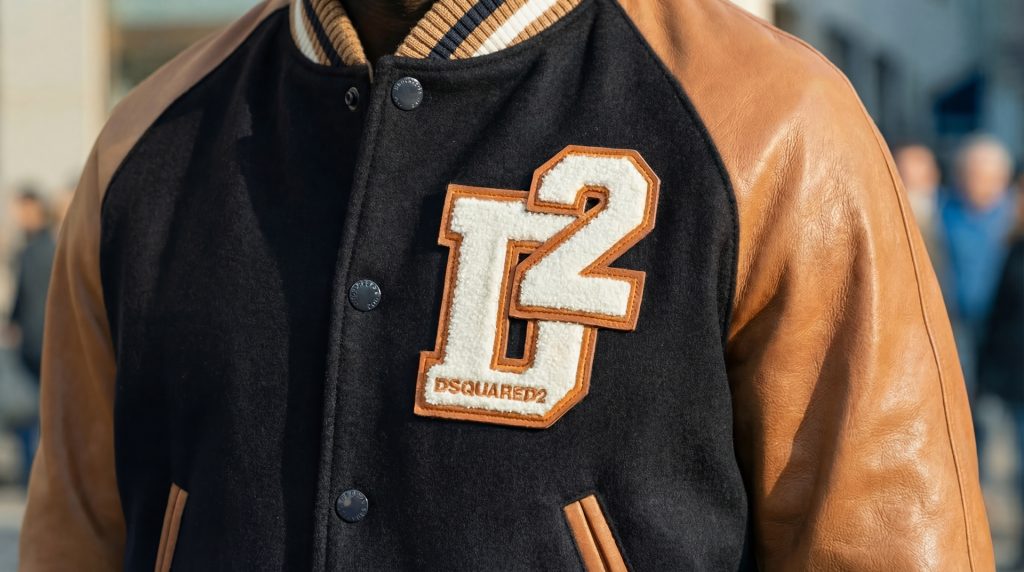
A close-up shot of the jacket with the focus centered on the logo. Ensure the colors, proportions, and detailing exactly match those in image 2. Reproduce the textured chenille material of the logo, the smooth leather trim outlining it, and the soft matte wool surface of the jacket body. The embroidered text ‘DSQUARED2’ must be clearly visible and rendered with accurate stitching, color, and depth. Maintain complete consistency in material texture, tone, and finish so the logo integrates seamlessly into the jacket exactly as shown
{
“scene”: {
“setting”: “urban street environment”,
“background_activity”: “people walking softly and out of focus”,
“mood”: “premium editorial streetwear aesthetic”,
“lighting”: {
“type”: “cinematic soft lighting”,
“fx”: “subtle highlights on fabric texture”,
“consistency”: “uniform across the sequence”
}
},
“subject”: {
“item”: “DSQUARED2 varsity jacket”,
“visibility”: “jacket only, model face and body fully excluded”,
“focus_points”: [
“embroidered DSQUARED2 logo”,
“wool body texture”,
“leather sleeves”,
“stitching and fabric detailing”
]
},
“camera”: {
“framing”: “medium close shot on chest area”,
“movement”: {
“type”: “slow smooth dolly in”,
“purpose”: “move closer to fabric texture and logo detail”,
“restrictions”: “never reveal model face or body”
},
“depth_of_field”: “shallow, background softly blurred”,
“stability”: “cinematic and steady”
},
“style”: {
“realism”: “high”,
“tone”: “premium fashion video”,
“texture_priority”: true
}
}
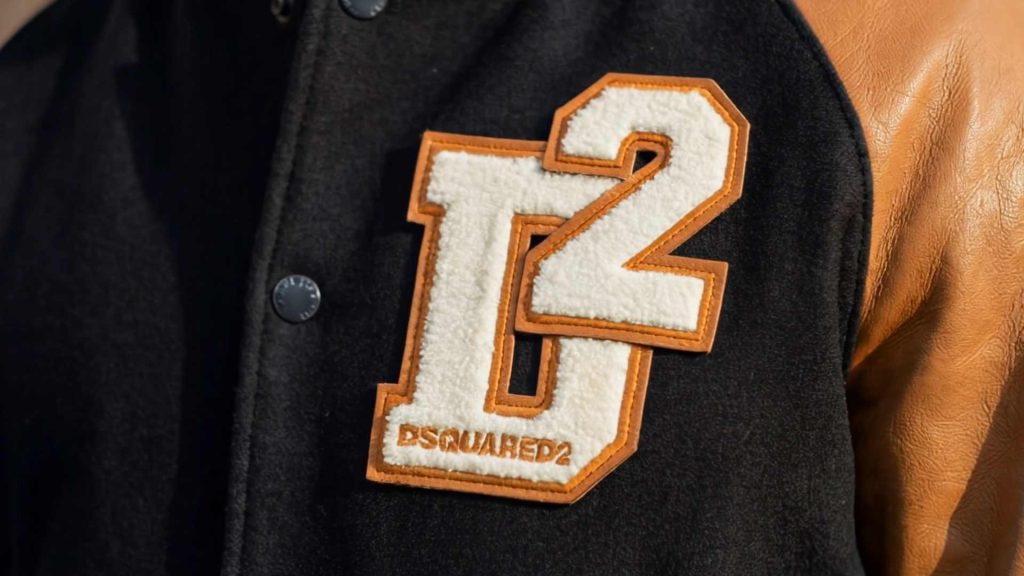
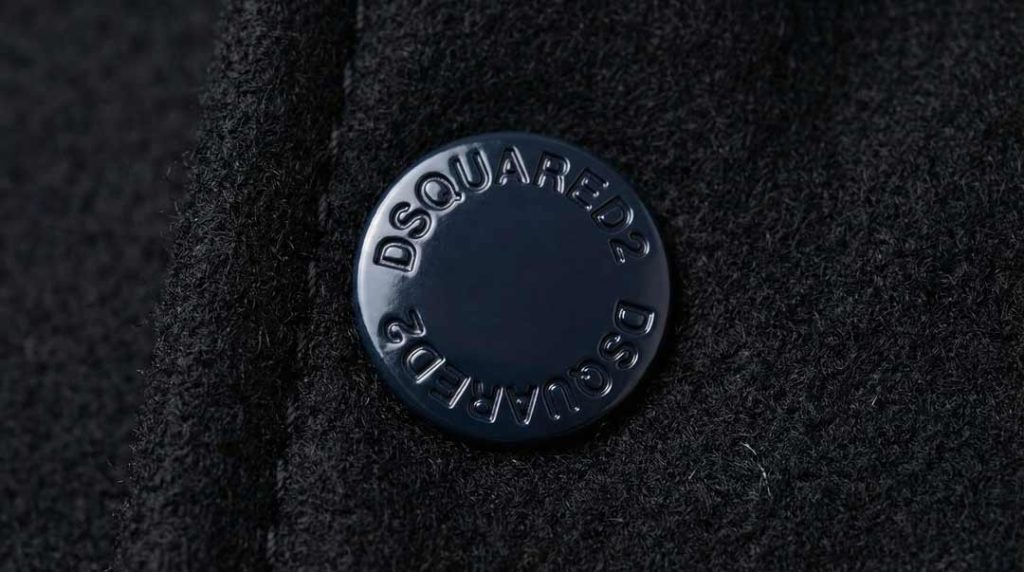
An ultra close-up, high-detail photograph of a jacket button. The button is dark blue and features two embossed ‘DSQUARED2’ inscriptions circling its outer edge. The material appears new and pristine, with no scratches, wear, or imperfections. The lighting emphasizes the smooth surface, fine texture, and crisp embossed lettering, creating a sharp, refined macro-style image
The camera performs a slow, smooth dolly-in movement toward a close-up of a luxury garment detail, building intimacy and visual impact with elegant cinematic pacing. Use premium fashion-magazine lighting: soft volumetric glows, controlled highlights, subtle lens flares, and refined shadow gradients. Add gentle motion in the atmosphere—micro-particles, soft reflections, and realistic fabric light play—to enhance visual richness.
Ensure that all text elements, logos, or embossed details remain fully readable, sharp, and unobstructed throughout the entire dolly-in. Do not blur, distort, or obscure typography at any point.
Maintain ultra-high texture accuracy, luxury color grading, editorial polish, and smooth depth-of-field transitions. The overall feeling should be modern, cinematic, and visually sophisticated.
urban stinger featuring a tight, punchy percussive structure with industrial sound-design elements, low-frequency rumbles, and metallic transients that evoke the texture of concrete and steel. The atmosphere should be dark, modern, and cinematic, built around a compressed, hard-hitting beat with subtle granular noise layers and smooth high-end accents for clarity. Maintain a confident, forward-driving rhythm that feels polished yet gritty, suitable for editorial fashion visuals. No vocals.
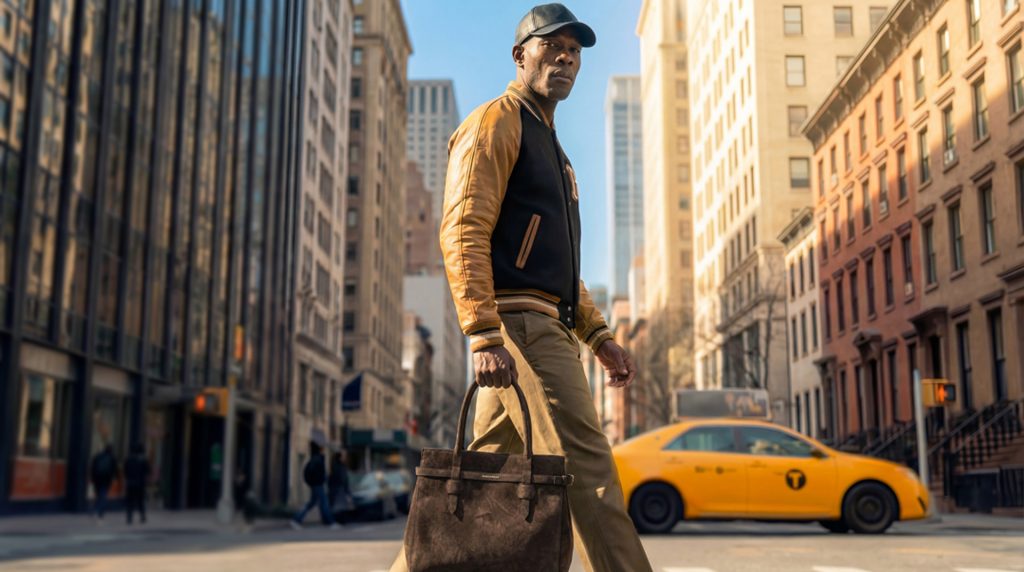
{
"subject": {
"description": "A male model walking forward with confident, natural pacing.",
"movement": "Steady, fluid steps with a composed and intentional posture."
},

"camera": {
"movement": "Tracking alongside the model in a smooth, gliding forward motion.",
"framing": "Clean, dynamic editorial framing with controlled composition.",
"depth_of_field": "Shallow to moderate, keeping the model in crisp focus while softly blurring the background."
},

"environment": {
"setting": "Urban city street.",
"background_elements": "A taxi drives past, adding real-world energy and motion.",
"lighting": "Stylish ambient urban lighting with a polished editorial tone."
},

"style": {
"videography": "High-end editorial fashion videography.",
"mood": "Polished, cinematic, modern.",
"visual_quality": "Magazine-quality clarity with smooth intentional motion."
},

"overall_prompt": "A cinematic editorial fashion video where a male model walks confidently as the camera tracks smoothly beside him. A taxi passes in the background, creating authentic urban motion. The scene features refined framing, controlled depth of field, and a polished, magazine-grade visual style."
}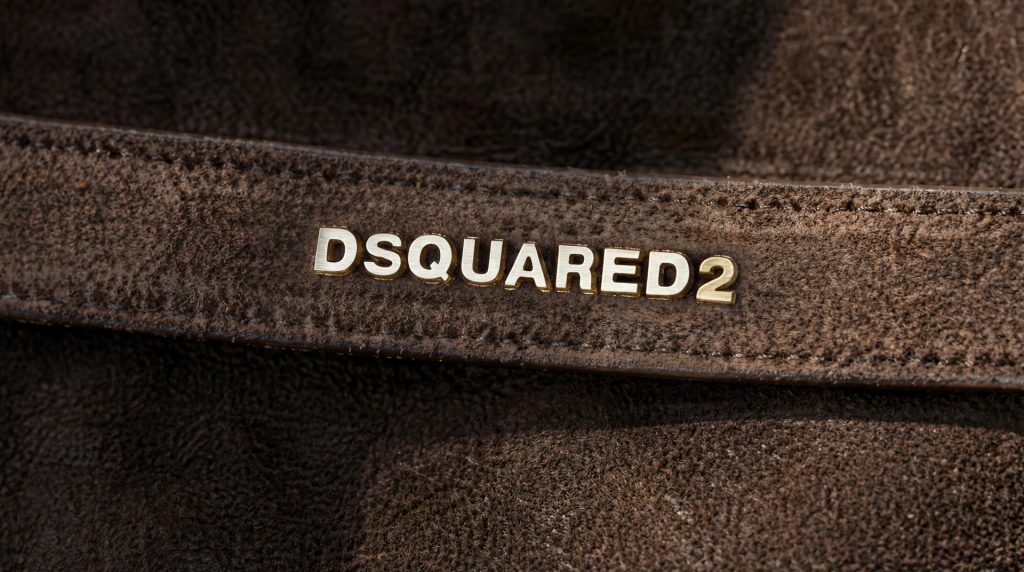
“Do not alter the angle, position, or size of the first image. Modify only the logo and its color. Replace the existing logo in the first image with a new one inspired by the materials, color tones, and overall style seen in the second image. The new logo must remain in the exact same position as in the first image, but should be clearly visible and rendered in the style of the second image. The text on the logo should read: Dsquared2
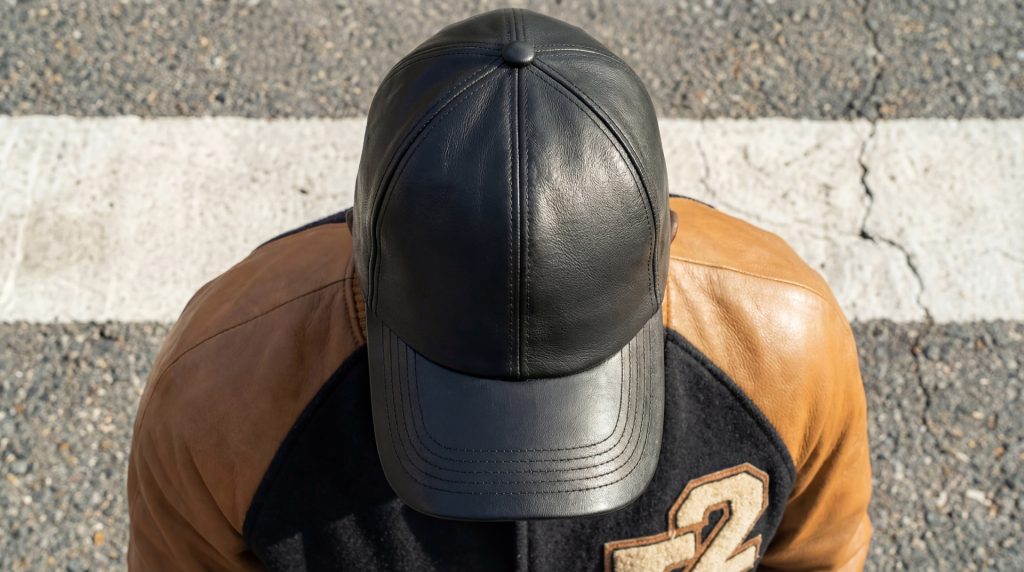
A close-up, top-down editorial photograph of the model standing outdoors at the crossroad in the street. The camera is positioned directly above the model’s head, emphasizing the rounded shape and material texture of a black cap. The model’s shoulders and upper body are visible, but the focus remains primarily on the cap and the strong overhead perspective. Bright natural sunlight creates crisp highlights and shadows across the model and the pavement. The composition is centered and graphic, with the asphalt texture and painted line forming a clean, urban backdrop.
The model is black, The video begins with a top-down view of a black leather baseball cap worn by a model whose face is never visible. Use a handheld camera style with soft, natural micro-movements to create an authentic editorial fashion feel. As the shot progresses, the camera makes a slow, subtle dolly-in, drawing attention closer to the leather hat’s texture—highlighting its grain, stitching, and natural sheen under daylight.

The model’s head moves gently—small, realistic shifts as if they are casually observing their surroundings—but the movement stays minimal and controlled so the hat’s surface remains the primary focus. The frame must never reveal the model’s face; only the hat, shoulders, and partial jacket remain visible.

Lighting is natural and consistent with a street setting: clean sunlight, soft shadows, and true color. No VFX or stylized lighting. The background (asphalt and crosswalk lines) stays softly present but never distracts from the focal point. The entire shot should feel premium, tactile, and intimate, emphasizing the texture and craftsmanship of the leather hat within an editorial fashion context
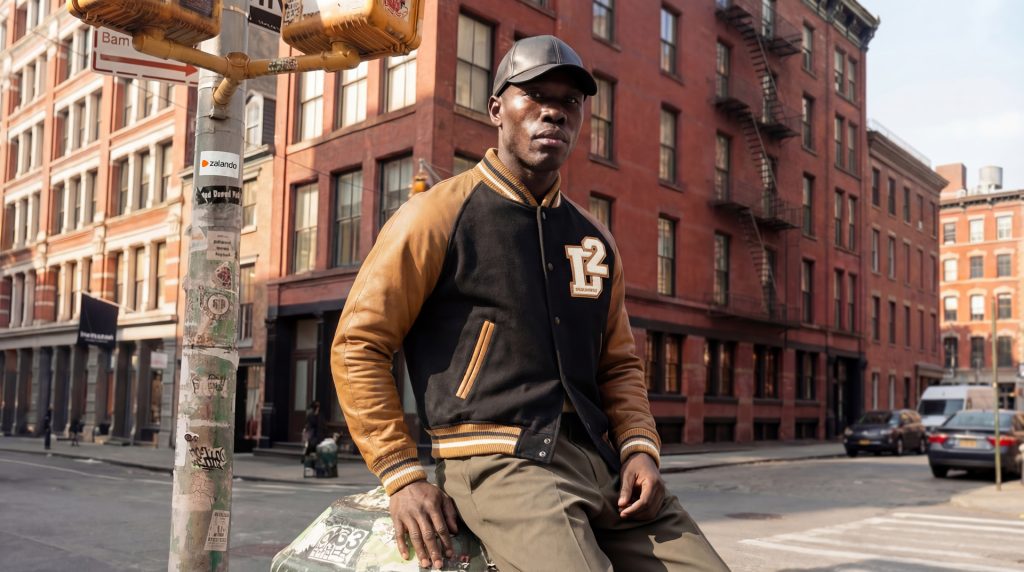
A cinematic editorial street portrait of a male model sitting casually on a weathered utility box at a city street corner in an urban neighborhood lined with red-brick buildings and metal fire escapes. The model faces slightly toward the camera with a calm, confident expression. His posture is relaxed: one hand resting naturally on the edge of the box, the other positioned near his lap, conveying grounded ease. Warm late-afternoon sunlight illuminates the scene, creating soft, directional shadows and a realistic, natural mood. A sticker-covered traffic pole stands beside him, and the street behind includes cars, pedestrians, and architectural depth. Use a shallow depth of field to keep the model sharply in focus while the background gently blurs, enhancing the cinematic and editorial quality.
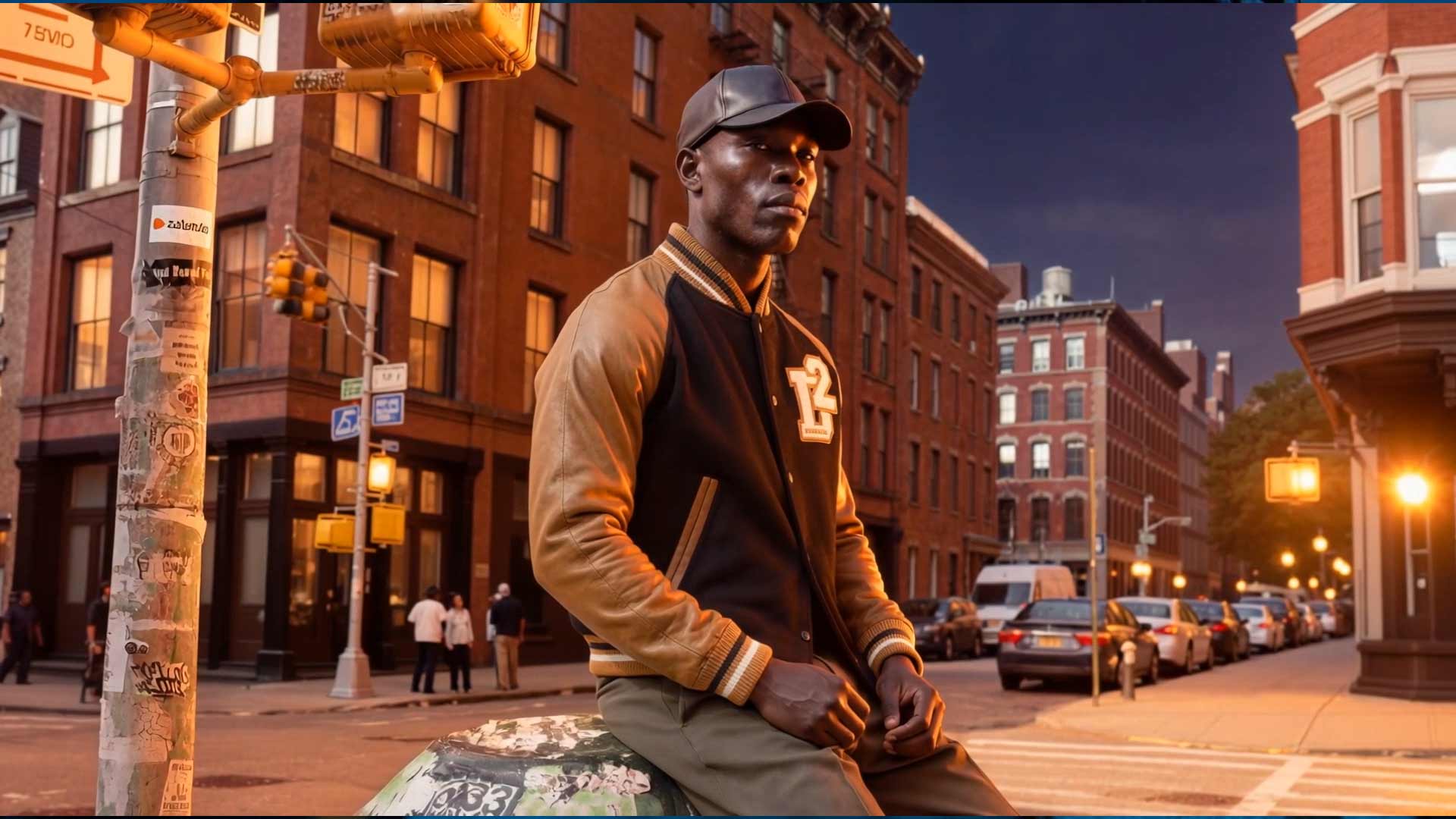
{
“subject”: {
“description”: “Editorial fashion model performing natural, normal-speed movements.”,
“wardrobe”: “High-fashion, stylized clothing suitable for an editorial shoot.”
},
“environment”: {
“description”: “A time-lapse background transitioning from day to night.”,
“final_state”: “Nighttime environment at the end of the time-lapse.”,
“mood”: “Cinematic, atmospheric, high-contrast lighting.”
},
“camera”: {
“movement”: “Handheld camera movement with subtle sway and natural instability.”,
“framing”: “Medium to full-body shots typical of editorial fashion videography.”,
“lens”: “50mm–85mm portrait-style focal length.”
},
“timelapse”: {
“speed”: “Accelerated background motion while the model stays in real-time.”,
“transition”: “Smooth day-to-night progression.”
},
“style”: {
“videography_type”: “Editorial fashion videography”,
“tone”: “Polished, cinematic, and visually dramatic.”,
“color_grade”: “Neutral fashion tones with nighttime contrast at the end.”
},
“overall_prompt”: “Editorial fashion videography with a model moving in real time while a fast day-to-night time-lapse plays in the background, ending in a nighttime scene with handheld camera movement.”
}
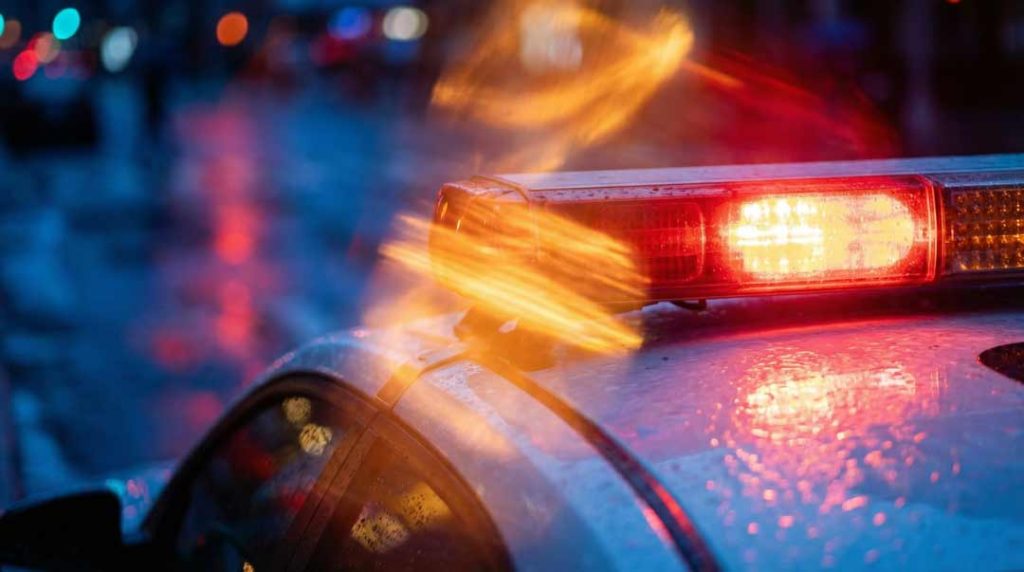
“A close-up, abstract editorial photograph capturing the red emergency light of a New York police car. The image is intentionally blurry and indistinct, creating a moody, atmospheric visual reminiscent of experimental fashion and art photography. The composition emphasizes soft motion, diffused color, and expressive ambiguity. The lighting style is inspired by the second reference image, using similar tonal qualities, intensity, and mood to shape the overall aesthetic
The police car speeds forward at high velocity as the camera rapidly punches in on the glowing red emergency light. The shot captures an intense, aggressive red lighting FX pattern pulsing across the frame, emphasizing urgency and motion. The combination of fast vehicle movement, dynamic zoom-in, and high-contrast red illumination creates a dramatic, high-energy action sequence
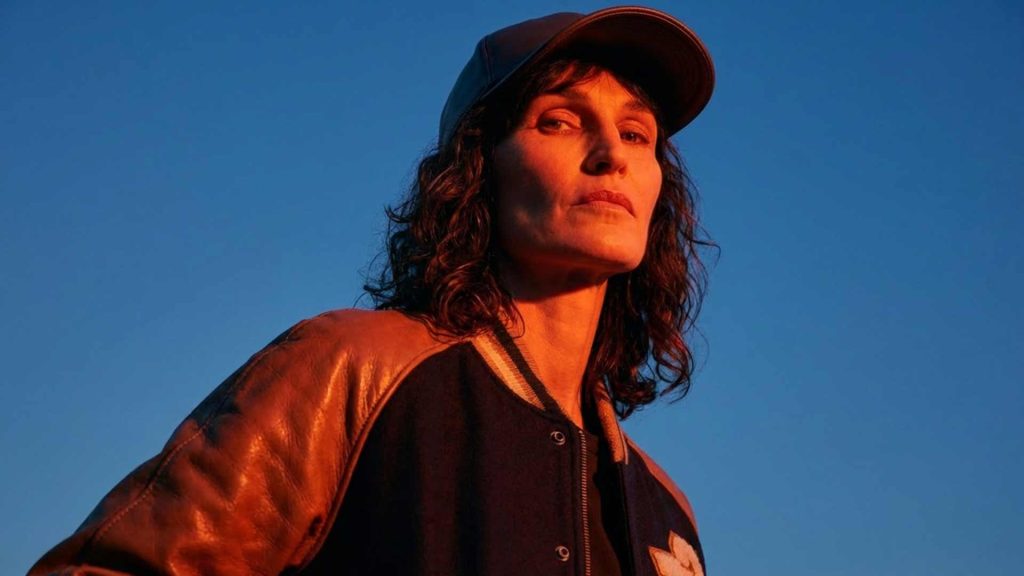
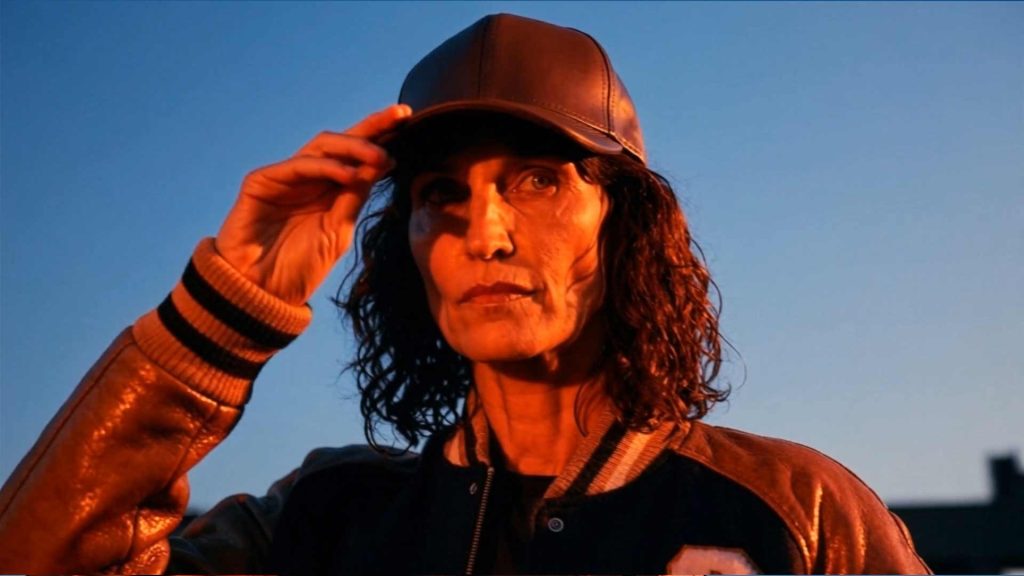
Studio Fashion photgraphy, The main light source appears to be positioned below the subject, casting an upward glow that drenches her face, neck, and coat in intense warm red-orange light.
This creates:

sculpted shadows under her chin and jaw

dramatic contrast across the folds of her coat

a cinematic, bold color effect reminiscent of sunset light reflecting off a warm surface (e.g., red wall, car light, or stage-style lamp)

2. Cool Ambient Sky Light (Fill Light)

The background sky is a deep clear blue, suggesting late daylight or sunset.
This provides:

a natural cool fill that balances the warm highlights

subtle light on the edges of her face and coat

atmospheric contrast between the warm subject and cool environment

3. Back/Edge Highlights

There are faint cooler highlights around the outline of her head and shoulders, likely from:

remaining ambient sky light

directional sunlight fading at the horizon

This helps separate her from the background and adds dimensionality.

4. High Contrast & Fashion Editorial Look

Because the key light is strong and directional, it creates:

deep, dramatic shadows

glossy reflections on the coat’s texture

a sculptural, editorial feel similar to high-fashion experimental lighting

5. Low Camera Angle Enhances Lighting Drama

Since the camera is shooting upward, the warm lower light dominates the frame, making the lighting feel even more intense and artistic.
Editorial streetwear fashion video with highly realistic lighting FX and cinematic atmosphere. The camera performs a smooth dolly-in while simultaneously rotating around the model, creating dynamic motion and depth. Emphasize realism, sharp detail, and a polished editorial tone, capturing the urban environment with immersive movement and visually striking lighting transitions
Lighting FX Description (Modern Fashion Editorial Style)

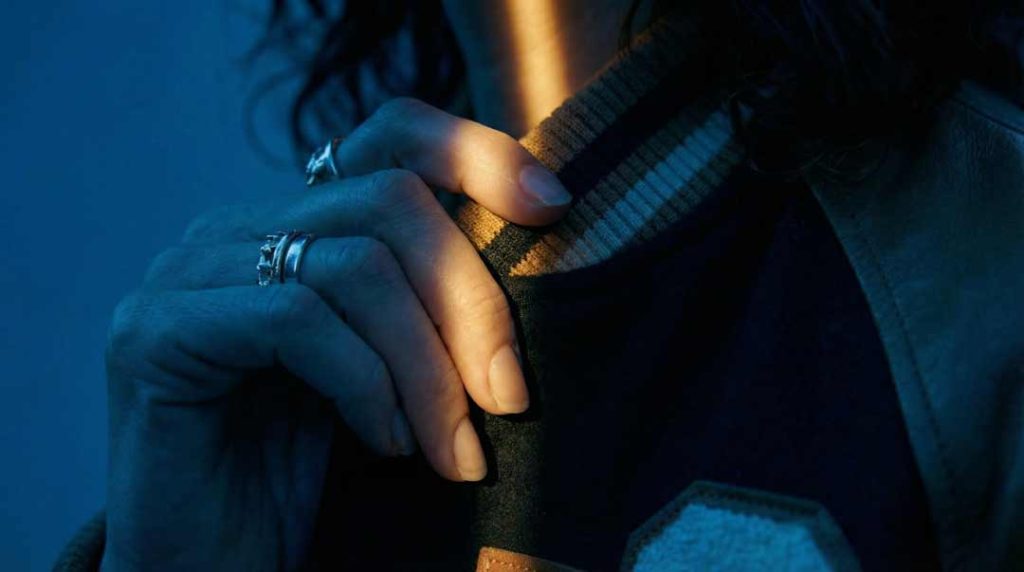
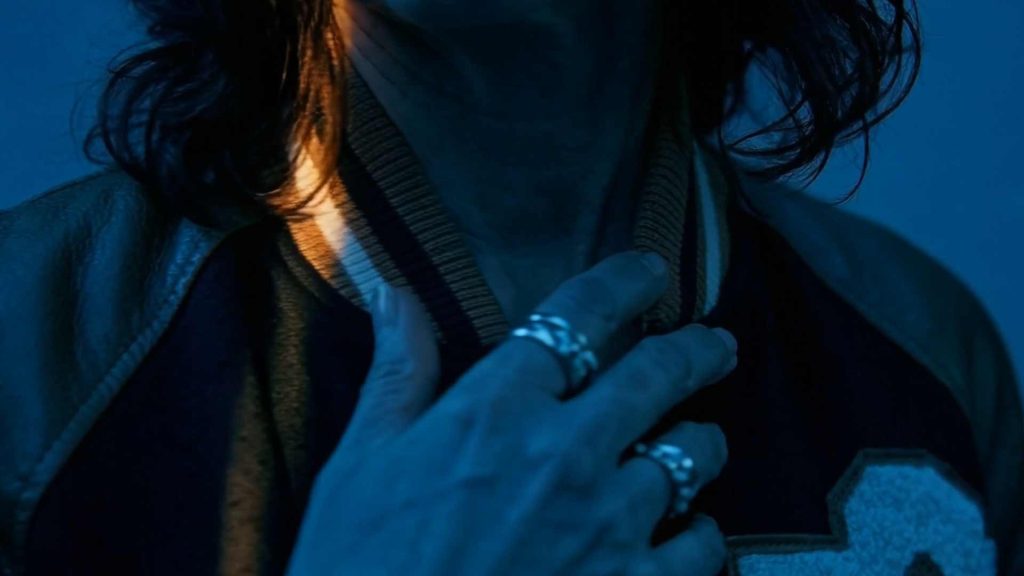
The lighting in this image is bold, graphic, and cyber-futuristic, combining moody shadows with a razor-thin strip of directional light for a dramatic, sculptural effect.
1. Deep Blue Ambient Wash (Primary Background + Fill Light)

The entire scene is bathed in a cool blue wash, creating a smooth, monochromatic gradient in the background.
This blue tone functions as the base fill light, the primary mood setter, and establishes a digital, futuristic palette often found in magazines such as Dazed, HUNGER, or i-D.

The ambient wash softens shadow details and creates a faint haloed silhouette around the figure.
2. Thin Vertical Beam of Warm Light (Key FX Light)

A single, narrow vertical beam of warm yellow light cuts across the subject’s face and torso.

This light:
Creates a spotlight-like stripe reminiscent of sunlight passing through blinds or a narrow slit
Divides the body into warm and cool tonal halves
Establishes a cinematic, high-contrast focal point
Produces a blade-shaped highlight on the sunglasses, emphasizing shape, contour, and attitude
The effect recalls stylized spotlight techniques used by photographers such as Petra Collins or Steven Klein—modern, edgy, and theatrical.
3. Heavy Shadow Sculpting on the Body

Because the warm beam is narrow and the overall illumination is low:
The face remains mostly in shadow
The musculature and fabric textures appear more dimensional and sculpted
One side of the figure becomes nearly a full silhouette
The combination of deep shadows and a hard, directional beam results in a graphic, poster-like visual style.
4. Reflective White Accessories Enhance the FX

The white sunglasses and tank top reflect both the blue ambient wash and the warm vertical beam, creating:
Strong highlights
Elevated contrast
A subtle futuristic glow
These reflective elements amplify the lighting effects and contribute to an editorial, stylized edge.
Overall Mood and Style

The lighting design produces a mood that is:
Cyber-cinematic
Cool, moody, and atmospheric
Minimalist yet visually commanding
The aesthetic blends 90s club-culture photography with contemporary digital editorial trends—a high-fashion visual language often used to explore themes of identity, attitude, and nightlife energy.
Editorial streetwear fashion video with sophisticated Lighting FX, highly realistic rendering, and detailed cinematic videography. The camera rotates smoothly around the model in a continuous motion, creating a dynamic, immersive perspective. The model subtly shifts her posture throughout the shot, interacting with and adjusting her clothing in expressive, fashion-forward movements. Emphasize refined lighting transitions, crisp detail, and a polished urban editorial mood
LIGHTING FX DESCRIPTION (Editorial Fashion Style)

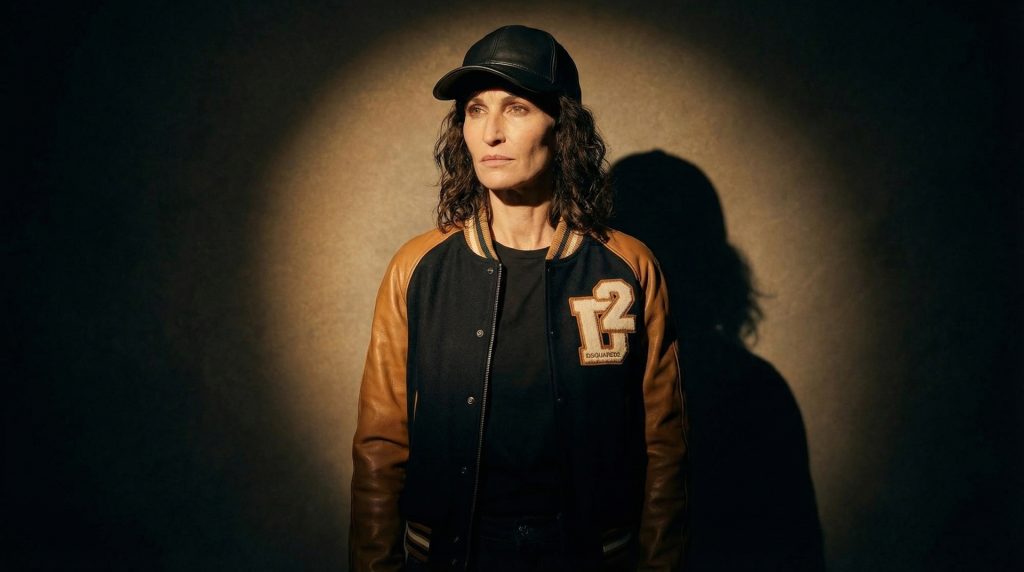
The lighting in this image is highly stylized, cinematic, and sculptural, yet still grounded in realistic studio practice.
1. Focused Spotlight With Soft Falloff

A single warm spotlight is aimed at the subject from above and slightly in front, creating:
A bright, concentrated highlight on the upper torso and head
A circular glowing patch of light on the backdrop
Soft falloff that gradually fades into deep shadow toward the edges
This results in a vignette-like halo effect on the background, directing visual focus toward the subject’s form.
2. Strong Directional Shadow

The spotlight produces a sharp, elongated shadow cast behind and slightly to the right of the subject.

This shadow:
Is clean and well-defined, emphasizing the hard light source
Adds dramatic tension and spatial depth
Contributes to a sculptural, expressive visual tone
The shadow functions almost as a secondary silhouette—an artistic element within the composition.
3. Warm Color Temperature

The lighting has a warm, golden tone reminiscent of:
Late-afternoon sunlight
Tungsten studio fixtures
Cinematic warm key lighting
This warmth enhances:
The texture and sheen of the satin dress
The softness of the skin tones
The mood of intimacy and understated elegance
4. Subtle Diffusion Around the Spotlight Core

Surrounding the brightest area, the light appears lightly diffused or gently scattered.

This effect may be produced by:
A reflector bounce
A gobo or diffusion panel
A slight amount of atmospheric haze in the studio
It contributes:
A soft, dreamlike glow
Organic texture on the backdrop
A painterly, ethereal quality to the overall image
5. Controlled Low Fill (Minimal Ambient Light)

The rest of the scene contains very little fill light, preserving deep shadows:
Along the lower legs
Within the folds of the dress
Around the outer edges of the environment
urban stinger featuring a tight, punchy percussive structure with industrial sound-design elements, low-frequency rumbles, and metallic transients that evoke the texture of concrete and steel. The atmosphere should be dark, modern, and cinematic, built around a compressed, hard-hitting beat with subtle granular noise layers and smooth high-end accents for clarity. Maintain a confident, forward-driving rhythm that feels polished yet gritty, suitable for editorial fashion visuals. No vocals.